
When engineers and fabricators evaluate waterjet technology, they often fixate on cutting speeds, pressure ratings, and head configurations, missing the fundamental truth that awaterjet isn't just a machine; it's a complete production platform where every component, from ultra-high-pressure pumps to intelligent software, works inharmony to deliver micron-level accuracy at industrial scale.
In Australia's competitive manufacturing landscape, where tolerances matter and downtime can cost fortunes, understanding a waterjet cutter as an integrated ecosystem becomes essential.
The followiing comprehensive examination reveals how modern CNC waterjet cutting systems transcends simple material cutting to become a strategic asset for precision manufacturing, defence fabrication, and advanced engineering applications.
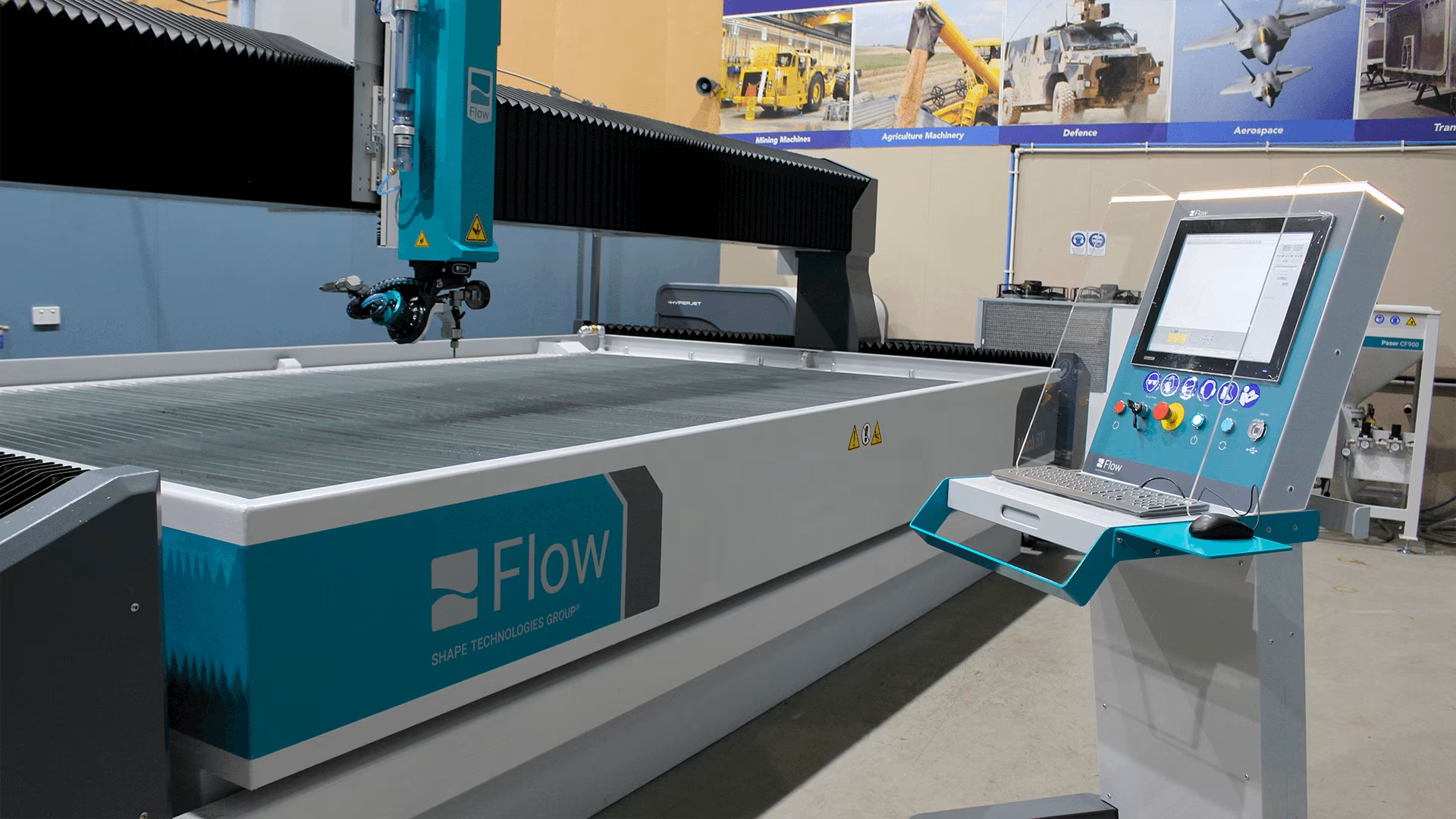
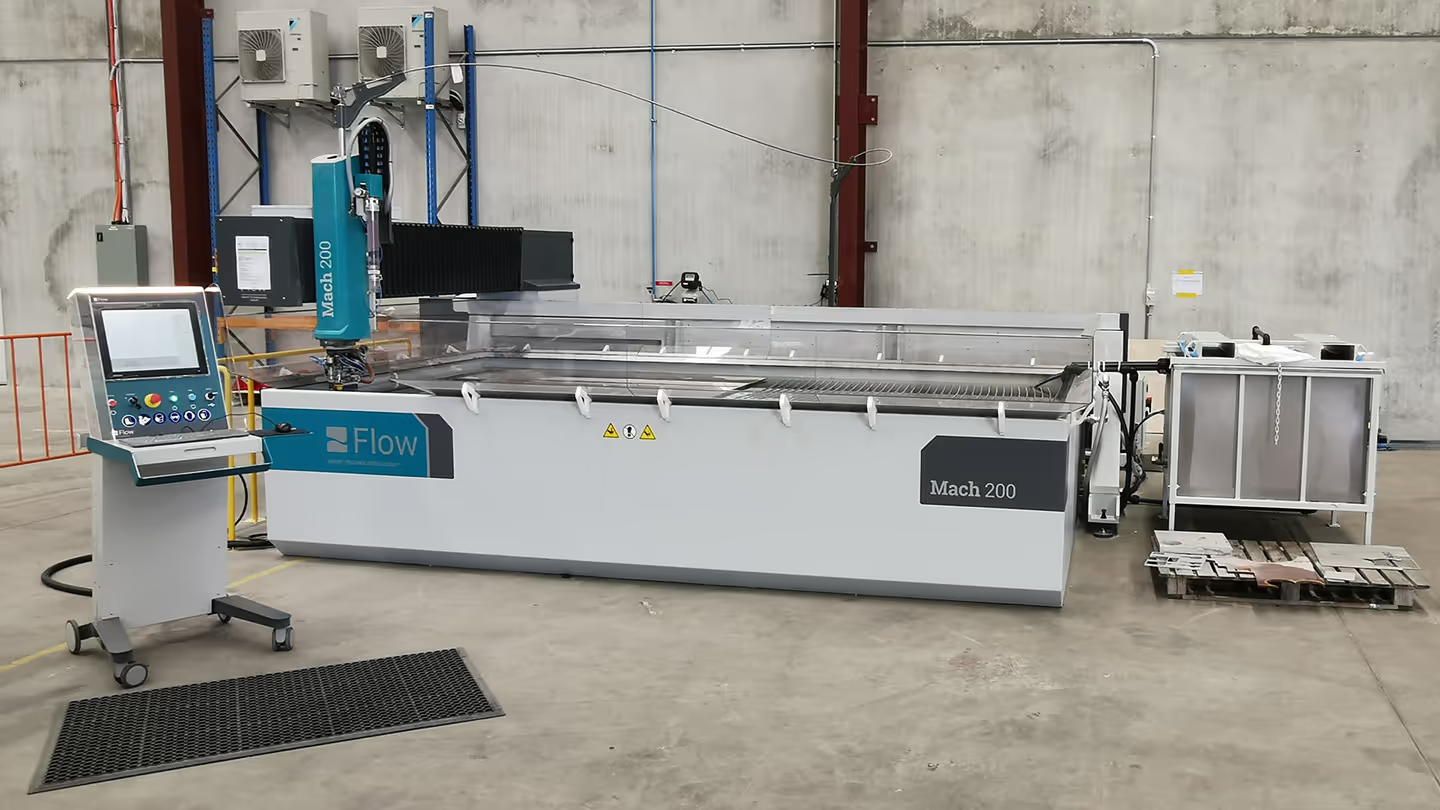
The sophistication of a modern waterjet cutting system extends far beyond the cutting head and pressurised stream. Beneath the surface is a tightly integrated ecosystem of mechanical, electrical, and digital components, all of which are playing a specialised role in ensuring accuracy, speed, and reliability across a wide range of materials.
To fully understand what sets high-performance systems apart, it's essential to view the waterjet as a complete production platform, not just a cutting machine. Each subsystem contributes to the overall outcome, and when these elements are optimised and working in sync, the result is consistent, micron-level precision at the industrial scale.
Each of these elements plays a critical role in the machine's performance. Yet, the CNC controller sits at the centre of it all, orchestrating each function with split-second precision. Let's take a closer look at how control architecture impacts the outcome.
At the head of every high-performance water jet CNC machine is a computer numerical control (CNC) platform that is essentially the digital brain that synchronises all system components in real-time.
It doesn't just tell the machine where to move; it actively manages pump pressure, traverse speed, head tilt, and abrasive flow on the fly.
This tight coordination allows waterjet systems to achieve exceptional linear accuracy (typically around ±0.025 mm), even when switching between vastly different materials like titanium, glass, or heavy-gauge steel. That level of precision isn't just theoretical; it's repeatable, shift after shift, because the system continually adjusts itself based on live cutting conditions.
Flow's advanced controllers go one step further by using predictive algorithms. Instead of simply reacting to material changes, they anticipate issues (like taper, lag, or kerf variation) and automatically fine-tune cutting parameters before quality is compromised.
Whether you're profiling defence-grade alloys or intricate inlays in porcelain, the water jet cutting system maintains clean, consistent edges without operator intervention. These features mean less rework, tighter tolerances, and greater confidence that your first part looks just as good as your hundredth.
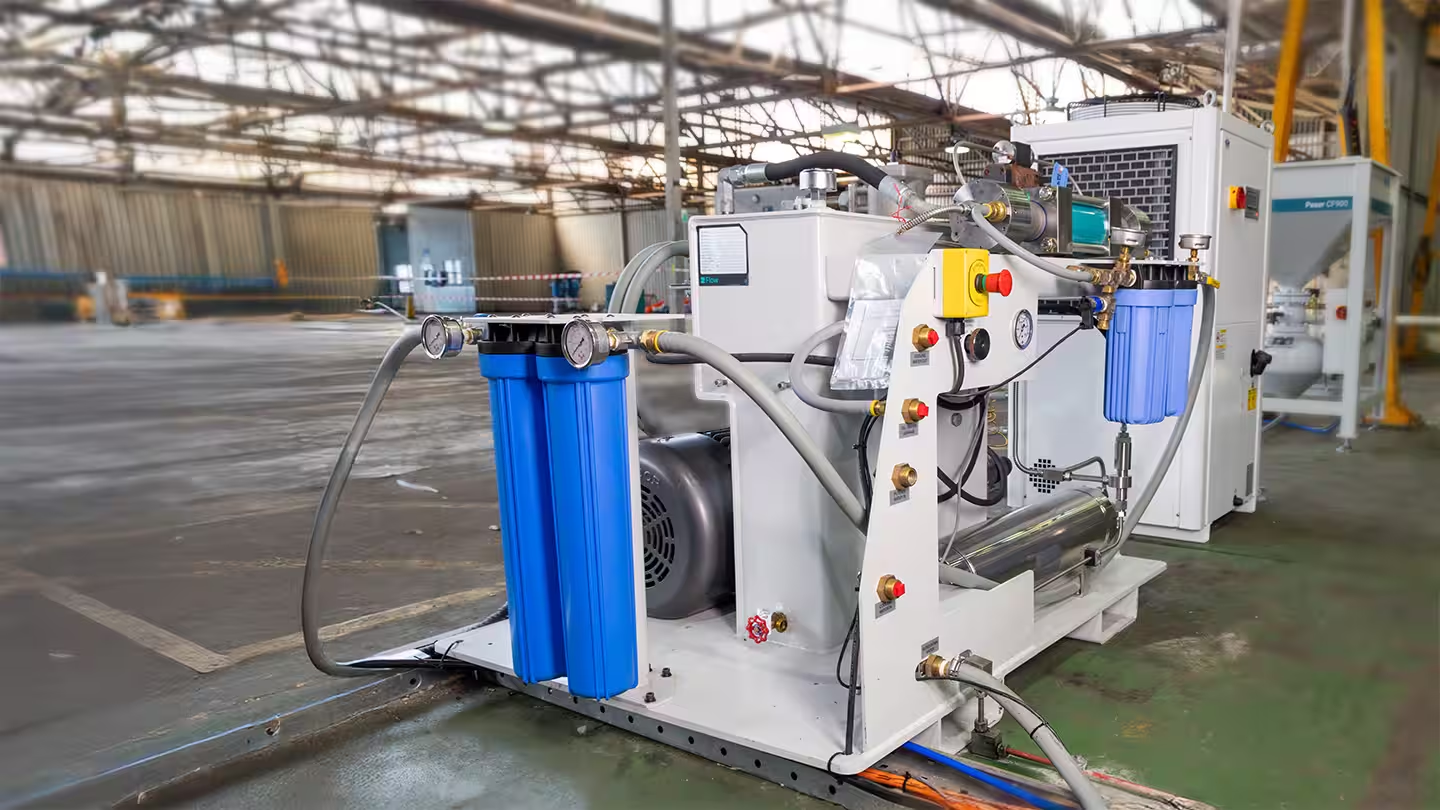
In any water jet cutting system, the pump is the power source that turns electrical input into ultra-high-pressure water - typically from 60,000 PSI (4,100 bar) up to 87,000 PSI (6,000 bar) continuous operating pressure, with some systems capable of peak pressures of 94,000 PSI (6,500 bar). This pressure enables precision cutting without heat and directly impacts cut quality, speed, and abrasive consumption.
Understanding how pump pressure, design, and control features interact is essential for choosing the right waterjet cutting system. It's not about chasing headline numbers. It's about matching the pump's characteristics to your materials, your throughput, and the level of finish your work demands.
For most fabrication applications, a 60,000 PSI (4,100 bar) pump offers a reliable balance between performance and operating cost. For example, the Ultralife 30SA intensifier pump is engineered for efficiency, delivering consistent pressure with lower energy draw, and is ideal for general-purpose cutting where throughput and cost-per-part must be tightly controlled.
When cutting thicker or more demanding materials, moving up to 87,000 PSI (6,000 bar) continuous operating pressure can offer a clear performance edge. That means cutting reliably at this pressure all day long, not just as a peak.
For example, Flow’s HyperJet pump technology can reduce pierce time and boost cutting speed by up to 20% compared to conventional 60,000 PSI waterjet systems, including many servo-driven pumps, while lowering garnet consumption thanks to a narrower, more concentrated stream.
This “up to 20%” figure is a conservative estimate based on the physics of waterjet cutting: while Flow’s HyperJet operates continuously at 87,000 PSI (a 45% increase in pressure over 60,000 PSI), cutting speed typically increases with the square root of pressure. This means the expected increase in cutting speed is approximately 20–25%, not the full pressure percentage increase.
Additionally, the HyperJet’s peak pressure of 94,000 PSI further enables faster cutting bursts for demanding jobs, delivering real-world productivity gains beyond what standard mid-pressure pumps can achieve.
At Performatec, we focus on true efficiency gains — lowering energy use, cutting operating costs, and improving uptime — so you can reduce your footprint meaningfully, without marketing hype.
While some purport savings of over 30,000 kWh per year, electricity savings alone don’t tell the full story on carbon footprint reduction. Flow’s HyperJet technology cuts not only power consumption but also garnet usage by 30–60%, significantly reducing the environmental impact of abrasive mining and transport.
Faster cutting speeds translate to shorter cycle times, less labour hours, and lower machine wear — all of which contribute to reduced resource use and operating costs.
When combined, these benefits offer a comprehensive path to sustainability that goes beyond simple kilowatt-hour calculations. By optimising every stage of your cutting process, you reduce waste, energy, and costs — delivering a truly meaningful reduction in your carbon footprint without relying on greenwashed claims.
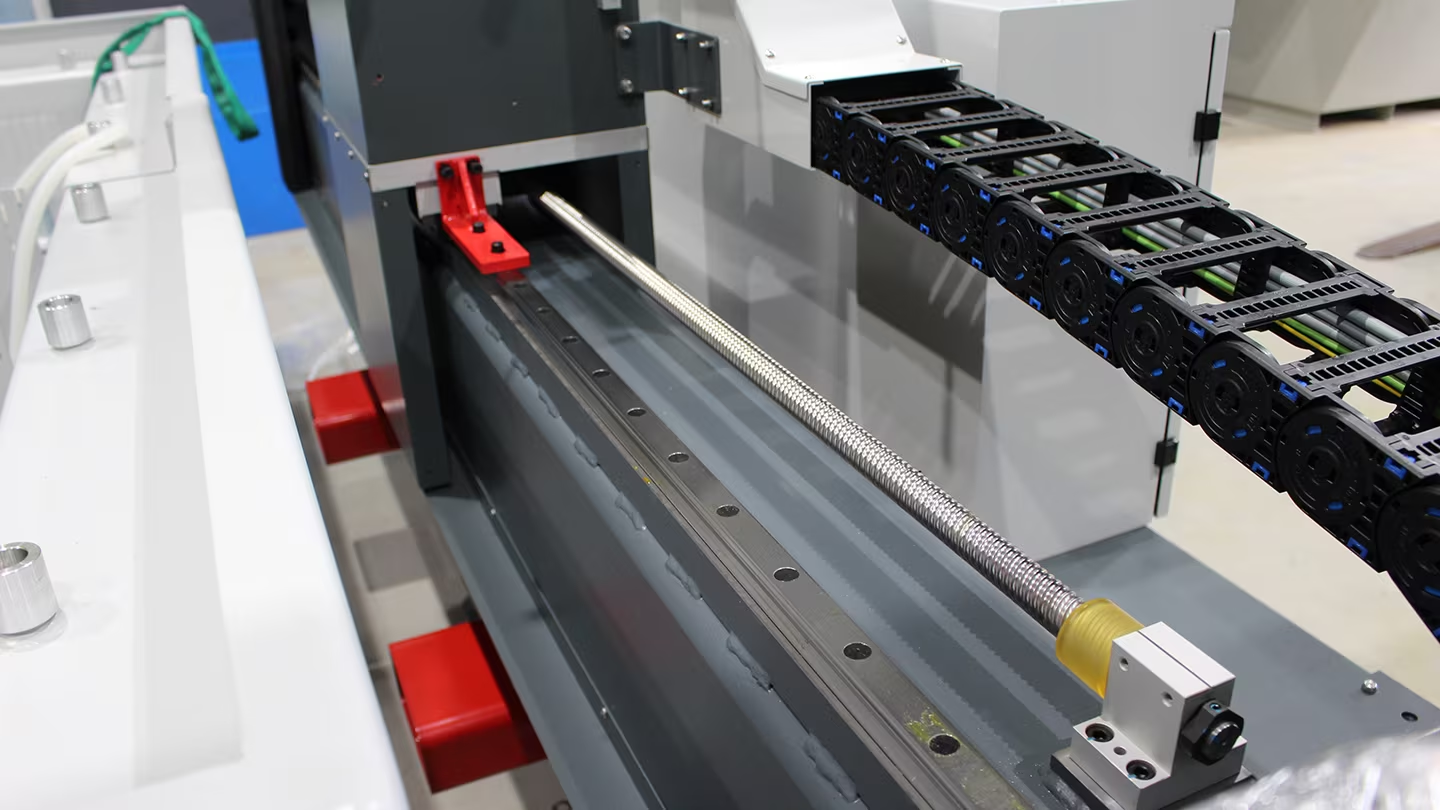
The motion system in a waterjet cutter is a critical contributor to accuracy, repeatability, and efficient production. It governs how precisely the cutting head moves in relation to the workpiece, which in turn impacts edge quality, kerf consistency, and job turnaround time.
There are two primary motion architectures used in Flow Waterjet cutting systems: ball screw and rack-and-pinion. Each is suited to different applications, and despite what you might hear on the shop floor, neither is categorically better than the other. It's not about right or wrong; it's about selecting the right system for the right job. If you get that match incorrect, you risk underutilising your machine or overinvesting in precision you don't need. Get it right, and your waterjet becomes a productivity asset with a rapid ROI.
Ball screw motion systems (as used across the Flow Waterjet Mach 150, 200, and 300 platforms) translate rotary input into precise linear displacement via preloaded ball bearings. This architecture is inherently backlash-free, providing consistent path fidelity under load and maintaining tighter geometric tolerances than rack-based alternatives on small- to mid-format tables.
Depending on the configuration, these systems deliver:
Ball screw drives are particularly well-suited for components requiring high edge quality and dimensional control, such as precision-machined assemblies for the defence sector, fine-feature gasket tooling, or thin-gauge material processing. When properly configured, they can also handle brittle substrates like glass, though this typically requires pure waterjet mode and features such as UltraPierce™ Vacuum Assist to avoid edge chipping or stress fractures during piercing.
For larger-format waterjet cutting systems or operations that prioritise high-speed output, rack-and-pinion motion offers a different advantage. Found in Mach 200C and Mach 700, this drive system uses geared motion to achieve high traverse speeds over extended work envelopes (up to 36 m/min in the case of Mach 700).
While slightly less precise in absolute terms (typically ±0.038 mm accuracy), rack-and-pinion systems:
With rugged construction and high-speed gantries, these systems are ideal for stone, mining, or transport industries where larger materials and fast cycle times are common.
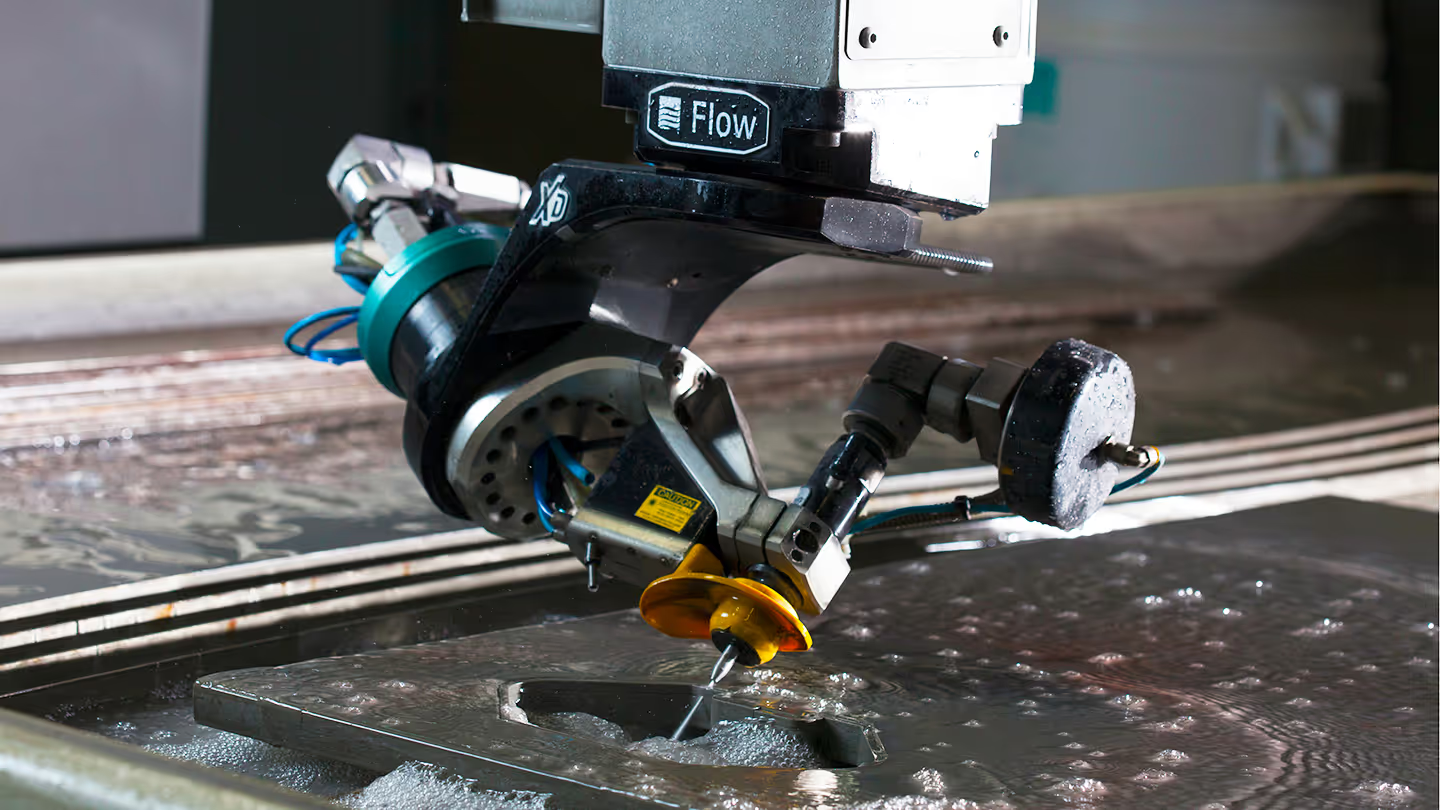
Precision in waterjet cutting is not just about raw speed—it’s about how well the system maintains control over geometry under real-world conditions. As materials change in thickness, density, or contour complexity, systems without intelligent axis control and real-time adjustment will quickly lose tolerance.
This is where Flow’s motion architecture comes in. Systems like Dynamic Waterjet® and Pivot+™ calculate and compensate dynamically across all five axes - X, Y, Z (vertical), A (tilt), and C (rotation) to maintain precise perpendicularity, accurate bevels, and consistent edge quality, even when cutting steep angles or layered profiles.
Even with perfect gantry alignment, every waterjet system faces the issue of stream lag.
As a brief explaination, stream lag is the natural taper created as the high-pressure jet exits slower than it enters, particularly in thick or dense materials. Flow’s Dynamic Waterjet® solves this by adjusting the tilt of the cutting head in real time to maintain square kerf walls across a range of thicknesses and feed rates.
Key benefits include:
For workshops dealing with multi-pass cuts, tight-tolerance profiles, or varying plate materials, taper compensation isn’t just nice to have; it’s a productivity safeguard.
Jobs that go beyond flat parts (think bevels, weld preps, compound mitres, or 3D contours) demand advanced articulation. To acheive this, Dynamic Waterjet® XD and Pivot+™ systems coordinate tilt and rotation angles with gantry movement, allowing for simultaneous control over all five axes.
This approach ensures:
Precision is driven by closed-loop servo feedback and real-time CNC logic, with FlowXpert® software managing geometry-aware toolpaths and live stream adjustments.
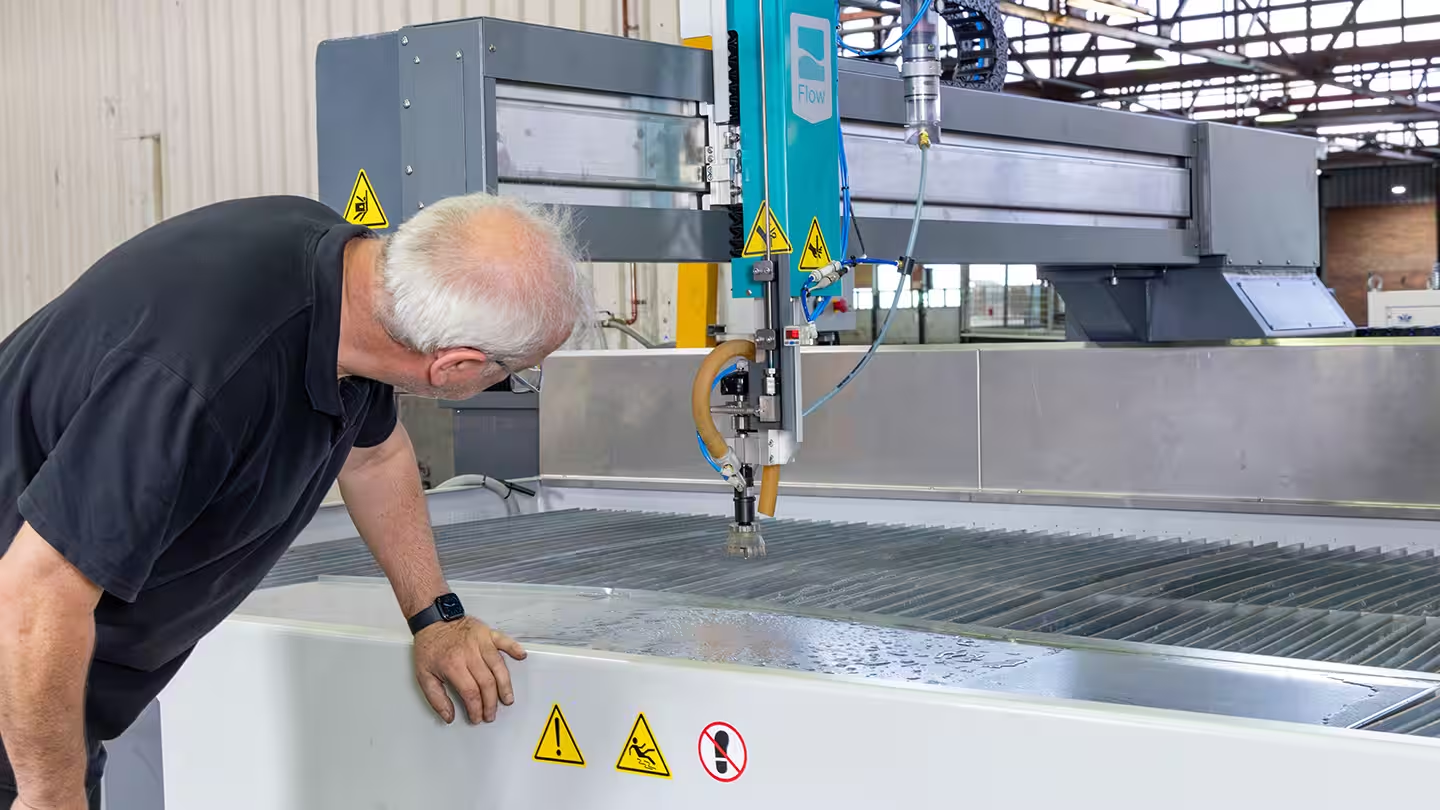
Waterjet cutting performance is also heavily reliant on the waterjet system's cutting head. It’s where ultra-high-pressure water is converted into precision parts and where production capability is either enabled or limited. From simple perpendicular cuts to complex 3D bevels, selecting the right cutting head configuration impacts production output, edge quality, and operational flexibility.
These heads remain the foundation for most industrial applications. With straightforward perpendicular cutting and the ability to switch between abrasive and pure water modes, these systems are built for volume and reliability. They handle everything from mild steel to composite laminates, and easily process materials over 250 mm thick. Stack cutting is supported for higher throughput, and setup is minimal, which is ideal for shops focused on high-yield, flat work without needing extensive calibration or advanced motion control.
As the name suggests, pure waterjet does not use waterjet garnet abrasive. This style shinesin contamination-sensitive applications. They’re the go-to for soft materials like foam, rubber, and textiles and also play a growing role in food production.
For manufacturers where hygiene, clean cuts, and non-contact processing are non-negotiable, pure water systems are a smart fit. Performatec currently supports several Australian food processing clients with custom-configured sanitary waterjet solutions designed for efficient, blade-free cutting of edible goods.
These heads bridge the gap between flat cutting and fully articulated control. Flow's Pivot+™ delivers bevel-ready performance in a compact footprint, making it perfect for weld prep, angular cuts, or chamfers without stepping into full 5-axis territory. For shops that need accuracy and flexibility but not a full-scale multi-axis gantry, Pivot+™ delivers speed and simplicity with real-time taper compensation.
Dynamic Waterjet® lifts that capability further by actively compensating for jet lag, taper, and material variation during cutting. It introduces speed (up to 4x faster beveling than standard heads) without compromising accuracy or requiring operagtor retraining. Human-friendly, efficient, and reliable, this waterjet cutting head is suited to complex part outlines and nested geometries on variable-thickness stock.
This bit of proprietary tech is where advanced fabrication meets automation. Designed for sloped surfaces, compound bevels, and full 3D profiling, the XD cutting head uses an articulated wrist to dynamically maintain kerf accuracy and orientation, regardless of material inconsistencies or movement complexity.
It eliminates the need for secondary machining by completing the entire part in a single pass and is especially relevant for the following scenarios:
With each waterjet cutting head tailored to different levels of complexity, choosing the right configuration is less about feature lists, and more about how those features enable efficiency, quality, and profitability in real-world workflows.
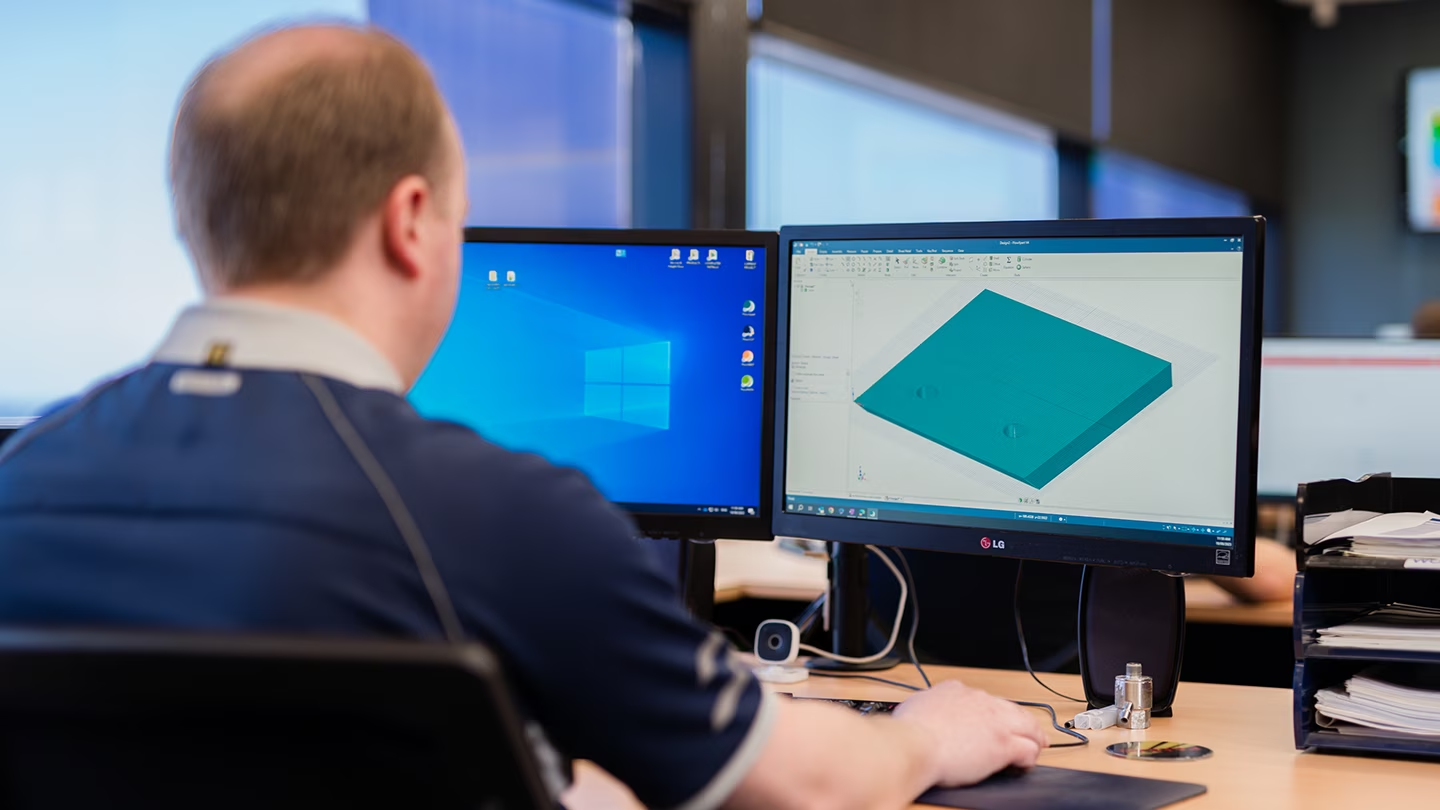
Software is the defining line between a high-pressure cutter and a true precision manufacturing platform. Without intelligent control, even the most advanced waterjet cutting systems can’t deliver consistent, production-grade results. It’s the software that translates machine capability into real-world reliability—automating everything from toolpath generation to material optimisation.
Flow’s integrated software ecosystem does exactly that. Whether you’re running one-off prototypes or high-volume production, the platform adapts to the job at hand—reducing operator input, removing guesswork, and ensuring repeatable accuracy from the first cut to the last.
FlowMaster® is the go-to solution for 2D cutting. It delivers powerful yet user-friendly CAD/CAM functionality through a clean, unified interface. Modules like FlowPath® and FlowCut® handle pathing, kerf compensation, pressure settings, and lead-ins based on a comprehensive material database. That means less trial-and-error, faster setup, and smoother results; especially for general-purpose or sheet-based work.
FlowXpert® steps things up with advanced 3D part modelling and simulation. It enables intelligent auto-pathing based on part complexity, while supporting an extensive range of input formats including DXF, DWG, IGS, and STEP. Raster-to-vector tools even allow JPG or PNG image files to be converted into editable paths, making it ideal for signage, creative applications, or legacy artwork.
Both platforms receive regular real-time updates, ensuring your waterjet cutting system stays aligned with evolving production demands and material advances.
Cutting performance isn’t just about edge quality. It’s also about efficiency, and that’s where FlowNest® shines. This purpose-built module applies advanced nesting logic to automatically arrange parts within offcuts, irregular shapes, and remnants. By optimising the cut layout in real time, it minimises material waste, reduces cycle times, and extracts every usable millimetre from expensive stock.
The software’s algorithms go beyond just fit. They calculate the most efficient cut sequence, manage safe spacing, and preserve kerf integrity, all while accounting for variations in thickness and material properties. What once took hours of manual nesting and toolpath planning is now done in seconds, making setup faster and far more predictable, regardless of the operator’s experience level.
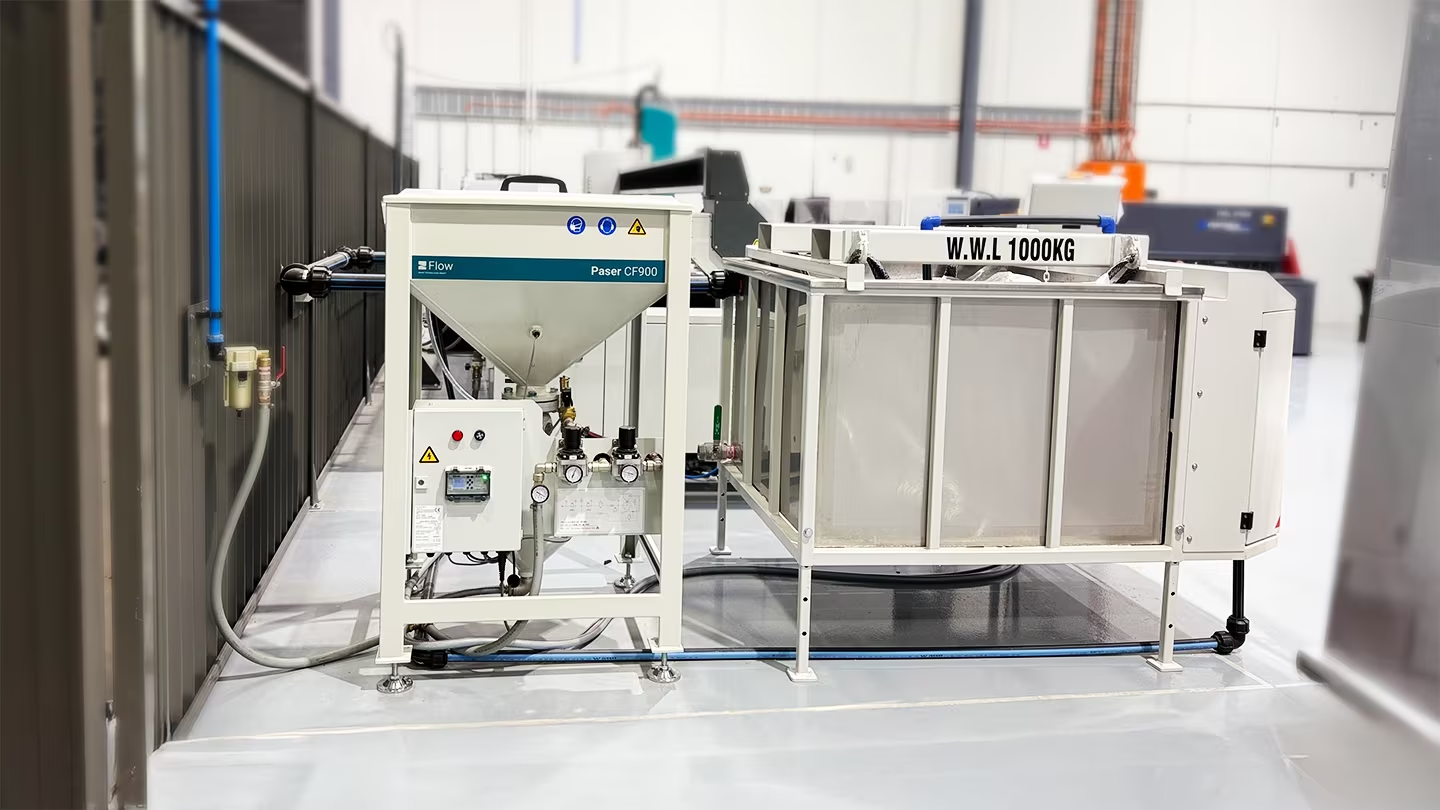
Beyond pumps and motion control, high-performance waterjet cutting systems are enhanced by a range of advanced accessories that improve safety, consistency, and efficiency. Whether you're focused on reducing downtime, improving part yield, or keeping your workshop running cleanly and safely during extended shifts, these enhancements are designed to scale with your production environment.
A consistent, uninterrupted abrasive flow is critical to maintaining cut quality and avoiding costly job restarts. A range of abrasive handling solutions address three key areas:
Industrial waterjet chillers are essential for thermal control under continuous load. They stabilise pump oil and cutting water temperatures, reducing heat-related expansion in seals and intensifier components.
Utilising an indsutrial chiller will help:
For workshops in warmer climates or running multi-hour cycles back-to-back, chillers aren't optional, they're a frontline defence against pump fatigue and seal blowouts.
High-end fabrication jobs demand absolute accuracy, even on imperfect or delicate materials. Flow's optional precision enhancement technologies offer real-time intelligence and process stabilisation to meet those demands:
SmartMap™ touch probe - Automatically scans material thickness and surface contours before cutting. This allows for dynamic toolpath adjustment based on actual material conditions—not assumptions. Particularly valuable for bevel work, nested patterns, or inconsistent plates.
UltraPierce™ vacuum assist - Enables stable, high-integrity pierces in brittle or composite materials such as glass, ceramics, and carbon fibre. By removing trapped air and stabilising the water stream at the moment of pierce, UltraPierce prevents cracking, reduces abrasive waste, and accelerates startup cycles. It's beneficial for high-value parts where even minor fractures are unacceptable.
Designed for safety and cleanliness, spray containment shields reduce overspray, splashback, and airborne mist that can compromise nearby equipment or workspace hygiene. These shields:
As you have gathered by now, selecting the right waterjet cutting system isn’t just a matter of table size, pressure rating, or software features. It’s about matching machine capability to the realities of your operation. This fact is true, whether you run a compact fabrication workshop or a large-scale production line. From reliable 3-axis systems like the Flow Waterjet Mach 150 to the specialist 5-axis waterjet cutter such as the Mach 500, Performatec delivers precision-engineered waterjet systems built for accuracy, reliability, and long-term return on investment.
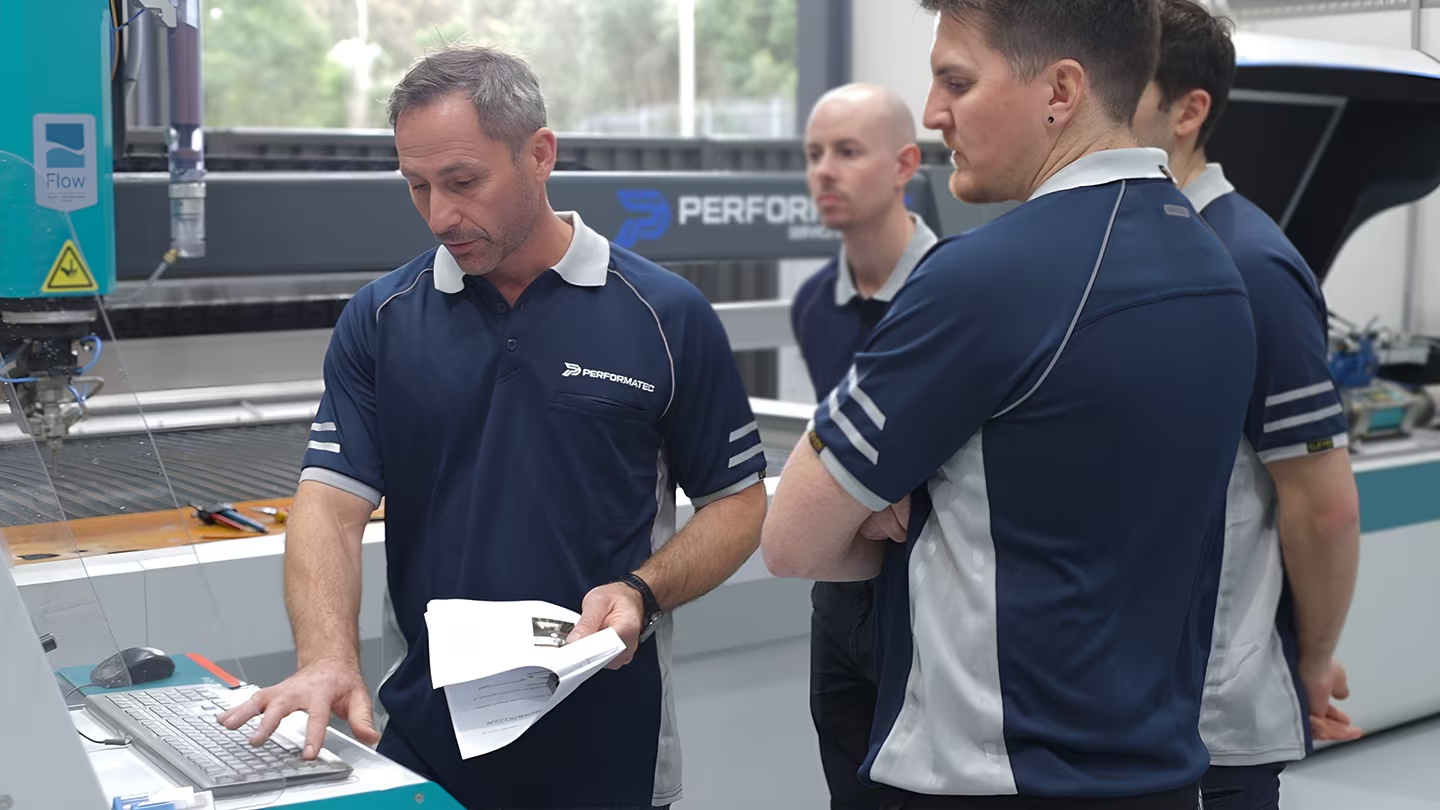
What sets Performatec apart is the level of support provided with every system. Our local installation and commissioning teams ensure each machine is optimised for immediate productivity, with on-site calibration, servo tuning, and material-specific presets tailored to your environment.
Multi-day operator training covers more than just basic operation. It includes workflow optimisation, setup refinement, and preventive maintenance practices that reduce downtime and increase output.
Performatec's waterjet machinery support is fast, local, and direct. Spare parts are dispatched the same day for orders placed before 3:00 pm AEST, and technical assistance is delivered by specialists who know the systems inside and out, without offshore delays or call centre frustration.
Every Performatec system is modular and upgradeable, designed to evolve with your production needs. Whether you’re introducing automation, expanding into 5-axis cutting, or integrating with Industry 4.0 infrastructure, we provide the tools and guidance to keep your operation moving forward.
If you’re looking to move beyond basic cutting and into precision manufacturing, contact Performatec and speak with the 'service is everything team'. We’ll help you define your requirements, match them to the right platform, and support you at every stage of the process so your investment delivers from day one and continues to deliver well into the future.

Join a growing list of manufacturing professionals receiving equipment and technology updates.
